MDX rendering fixture.
A complete example of the Log reading surface, covering prose, code, images, quotations, lists, and structured data.
This example exercises the Log detail template with ordinary prose, an
external link to the Astro documentation,
inline code, and the rhythm between different kinds of content.
A section heading
The article body should remain comfortable to read even when a post mixes narrative, technical notes, and visual evidence. The renderer should preserve semantic HTML while the page supplies the Stray Lab reading system.
A useful record should show what changed, why it changed, and what remains uncertain.
What this fixture covers
- regular paragraphs and external links;
- second- and third-level headings;
- unordered and ordered lists;
- block quotes and inline code;
- fenced code with syntax highlighting;
- images and captions;
- tables and horizontal separators.
type ProductStatus = "daydreaming" | "cooking" | "shipped" | "buried";

export function isPublicRecord(draft: boolean) {
  return !draft;
}
Visual evidence
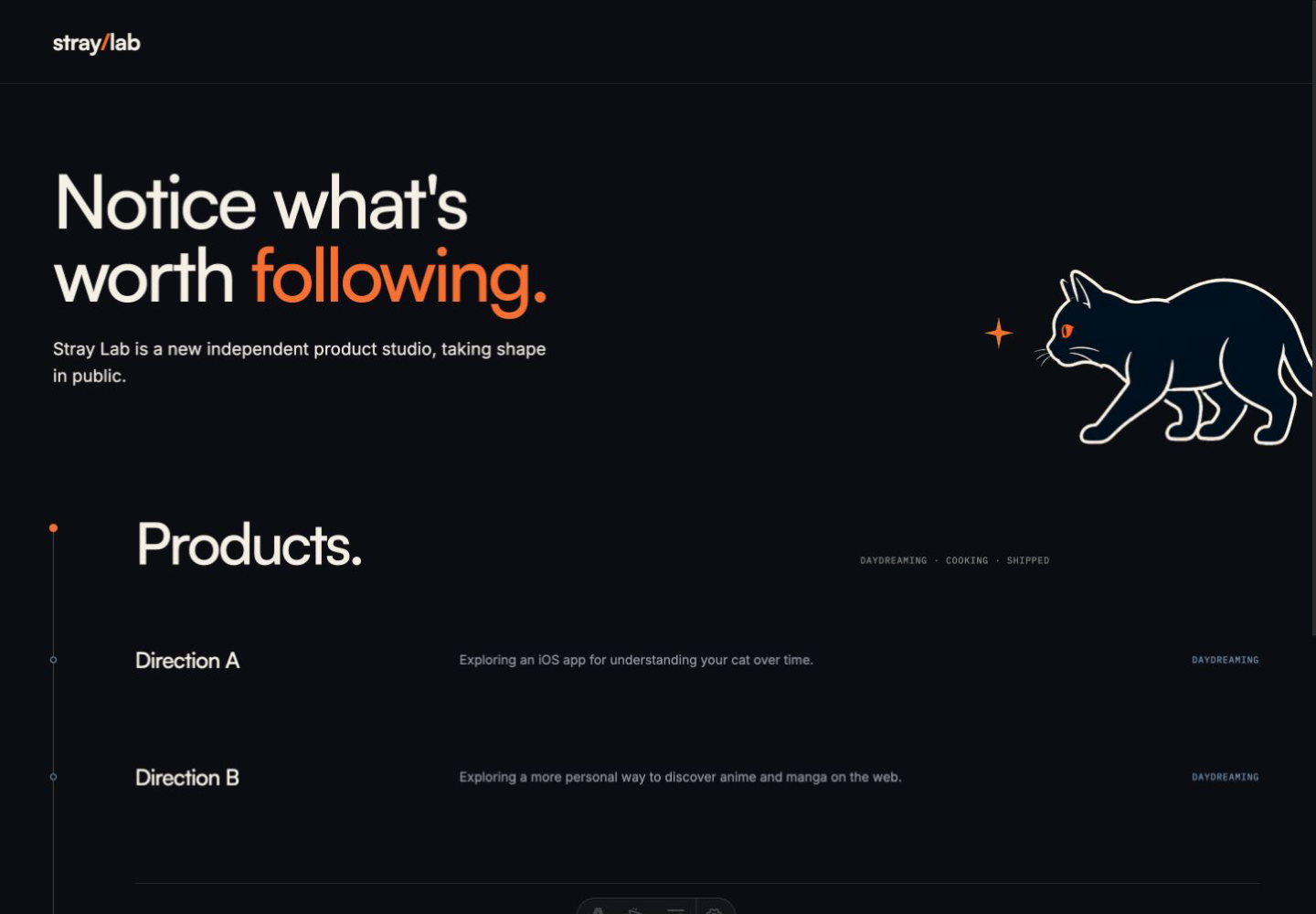
The approved homepage implementation, showing article-image and caption rhythm.
A compact comparison
| Layer | Purpose | Typical cadence |
|---|---|---|
| Weekly update | Studio-wide summary | Weekly |
| Standalone post | A decision or lesson worth its own entry | When useful |
| Product record | Product-specific progress | As work changes |
Closing the record
- State what was observed.
- Record the decision that followed.
- Link to evidence when it exists.
- Leave unresolved questions visible.
This final paragraph checks the transition from structured material back into ordinary reading copy. A Log entry ends with navigation rather than a newsletter or sharing panel.